
- Pictures
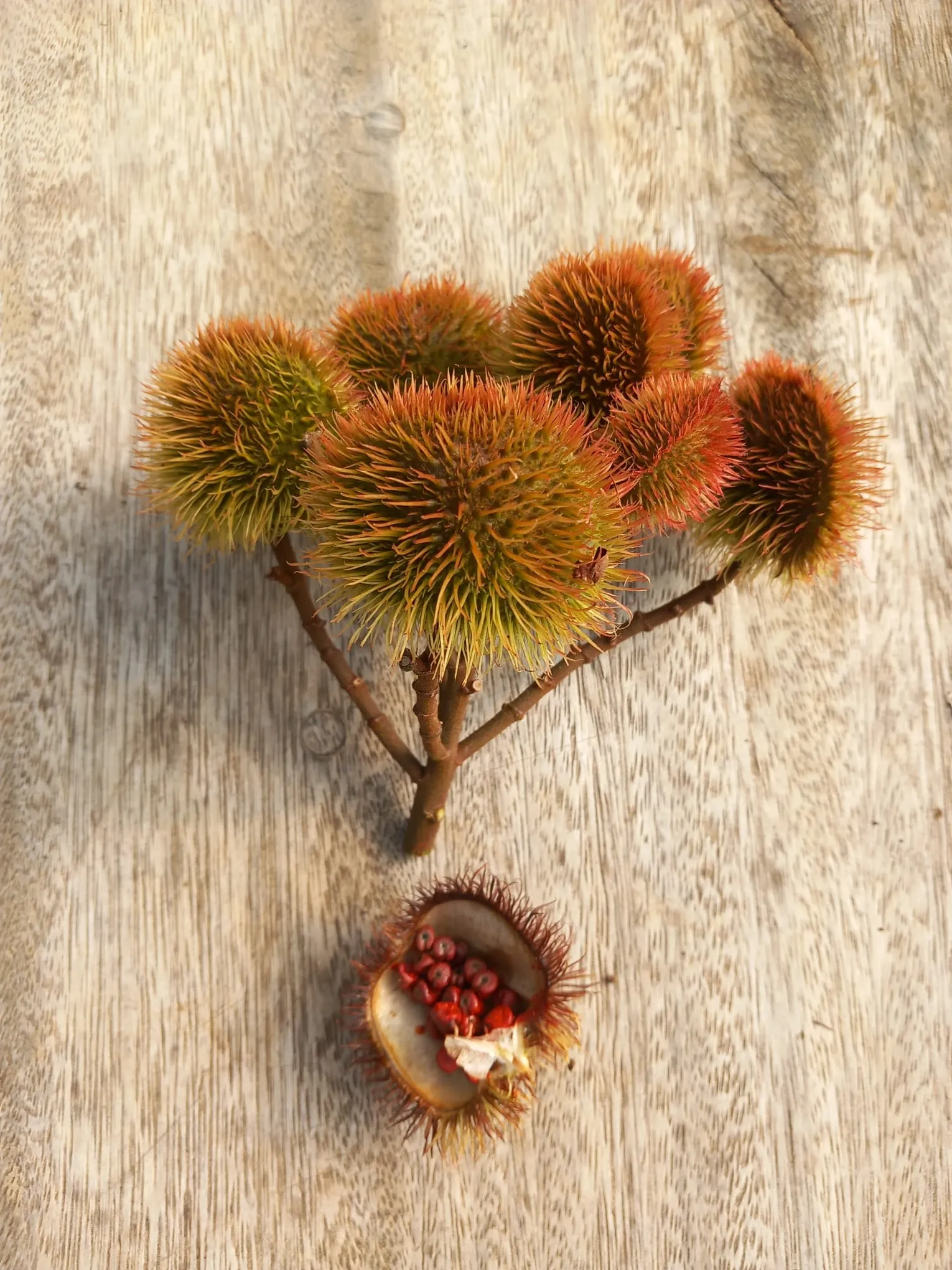
- Origin
- Central America
- Harvest Time
- 3-4 years
- Usage
- Culinary
- Perennial/Annual
- Perennial
- Growth Type
- Shurb, Small-Tree
- Planting Distance
- 2-4 meters between plants
- Nutritional Info
- Rich in carotenoids (especially bixin and norbixin) — natural antioxidants and coloring agents. Contains small amounts of calcium, magnesium, and folate. Low in fat and carbohydrates (used mainly for pigment and phytochemicals rather than calories)
- Strata Category
- Medium
- How to eat
- Seeds are used as a natural food coloring and mild spice. Commonly used to make achiote paste (recado rojo) for seasoning meats, rice, soups, and stews — especially in Latin American and Caribbean cuisines. Seeds can be steeped in oil or lard to make achiote oil, which gives dishes a rich red-orange color and subtle earthy flavor.The young leaves are sometimes used to wrap foods for steaming or grilling.
- Harvest days
- Tuesday, 14. October - Weekly Food Basket, Tuesday, 21. October - Weekly Food Basket, Tuesday, 4. November - Weekly Food Basket
- Medicinal Uses
- Traditionally used as an antioxidant, anti-inflammatory, and antimicrobial. Used in teas or infusions (from leaves or seeds) to support digestion, reduce fever, and soothe skin irritations. The red pigment (bixin) has skin-protective and antioxidant effects, sometimes used topically for rashes or burns. In some traditional medicine systems, leaves are used as a natural antiseptic and for liver or kidney support.
- Life Cycle
- Secondary 2
- Spanish Name
- Achiote
- Category
- Leafy greens & herbs
- Scientific Name
- Bixa orellana
- Edible parts
- Seed, Young leaves
Written by neighbors in the community guide. Last edited January 14, 2026.Open in Notion