
- Pictures
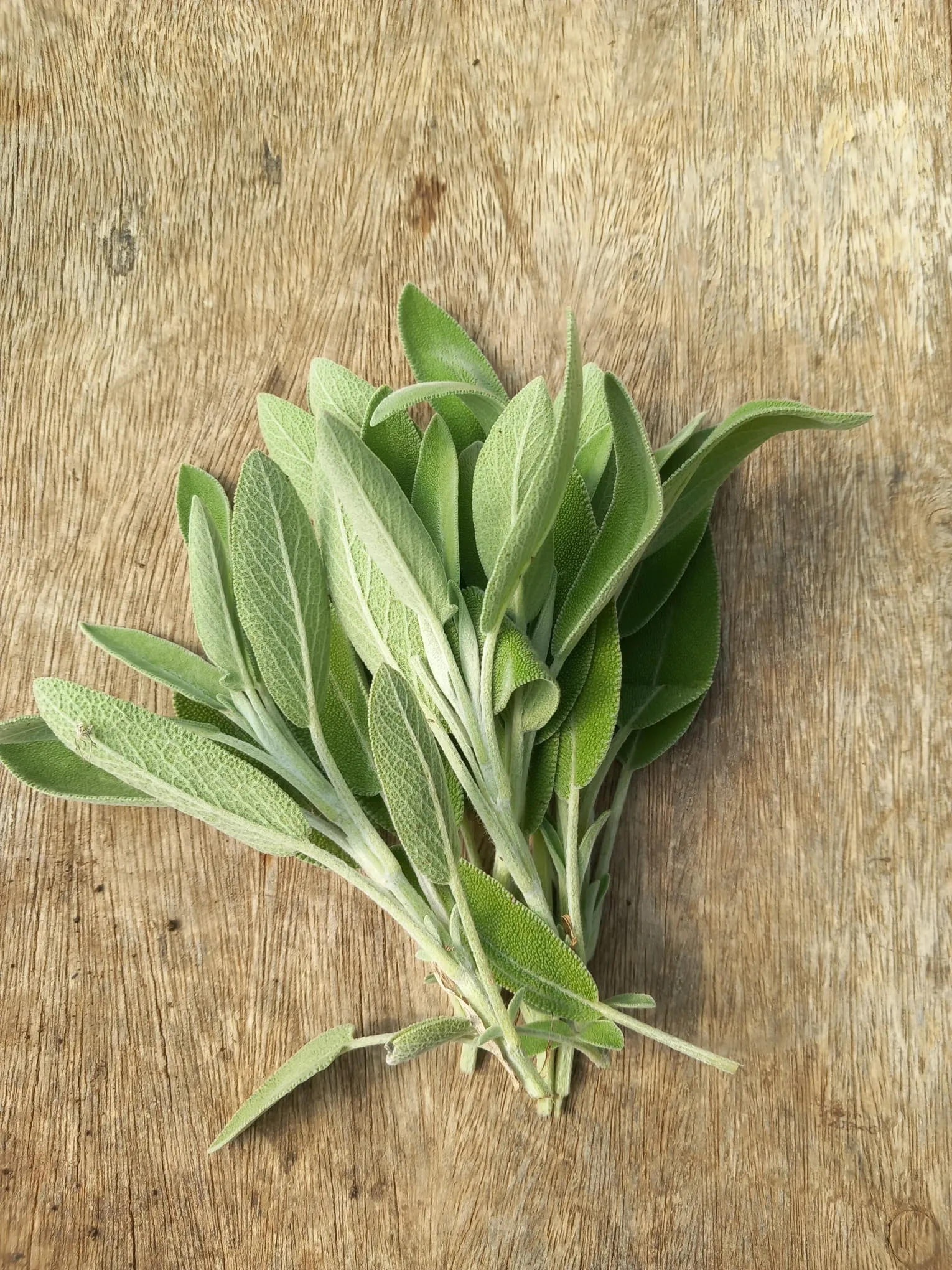
- Origin
- Mediterranean
- Harvest Time
- ~ 75 days after sowing from seed. Leaves can then be harvested throughout the growing season.
- Usage
- Culinary, Medicinal, Pollinator
- Perennial/Annual
- Perennial
- Growth Type
- Shurb
- Planting Distance
- 30–60 cm apart per plant
- Nutritional Info
- Contains vitamins A, C, K, and small amounts of B-vitamins. Rich in antioxidants, calcium, magnesium, and iron. Essential oils: thujone, cineole, camphor.
- Strata Category
- Low
- How to eat
- Fresh or dried leaves used to flavor meats, pasta, and sauces. Infused as sage tea for sore throats. Flowers edible, can garnish dishes.
- Harvest days
- Tuesday, 9. September - Weekly Food Basket, Tuesday, 23. September - Weekly Food Basket, Tuesday, 14. October - Weekly Food Basket, Tuesday, 11. November - Weekly Food Basket, Tuesday, 23. December - Weekly Food Basket, Tuesday, 13. January - Weekly Food Basket, Thursday, 5. March - Weekly Food Basket, Tuesday, 12. May - Weekly Food Basket, Tuesday, 26. May - Weekly Food Basket, Tuesday, 16. June - Weekly Food Basket
- Medicinal Uses
- Traditional herb for sore throats, coughs, and mouth infections (antimicrobial). Used for digestion and bloating. Traditionally believed to support memory and clarity. Antiseptic and anti-inflammatory.
- Life Cycle
- Secondary
- Spanish Name
- Salvia
- Category
- Leafy greens & herbs
- Scientific Name
- Salvia officinalis
- Edible parts
- Leaves, Flower
Written by neighbors in the community guide. Last edited September 9, 2025.Open in Notion